How to read a protein label
Turn the bag around. Five lines on the back of a protein label decide what you are actually drinking.
The front of the bag is written by marketing. The back is written to a federal standard. Here is how to read it, line by line.
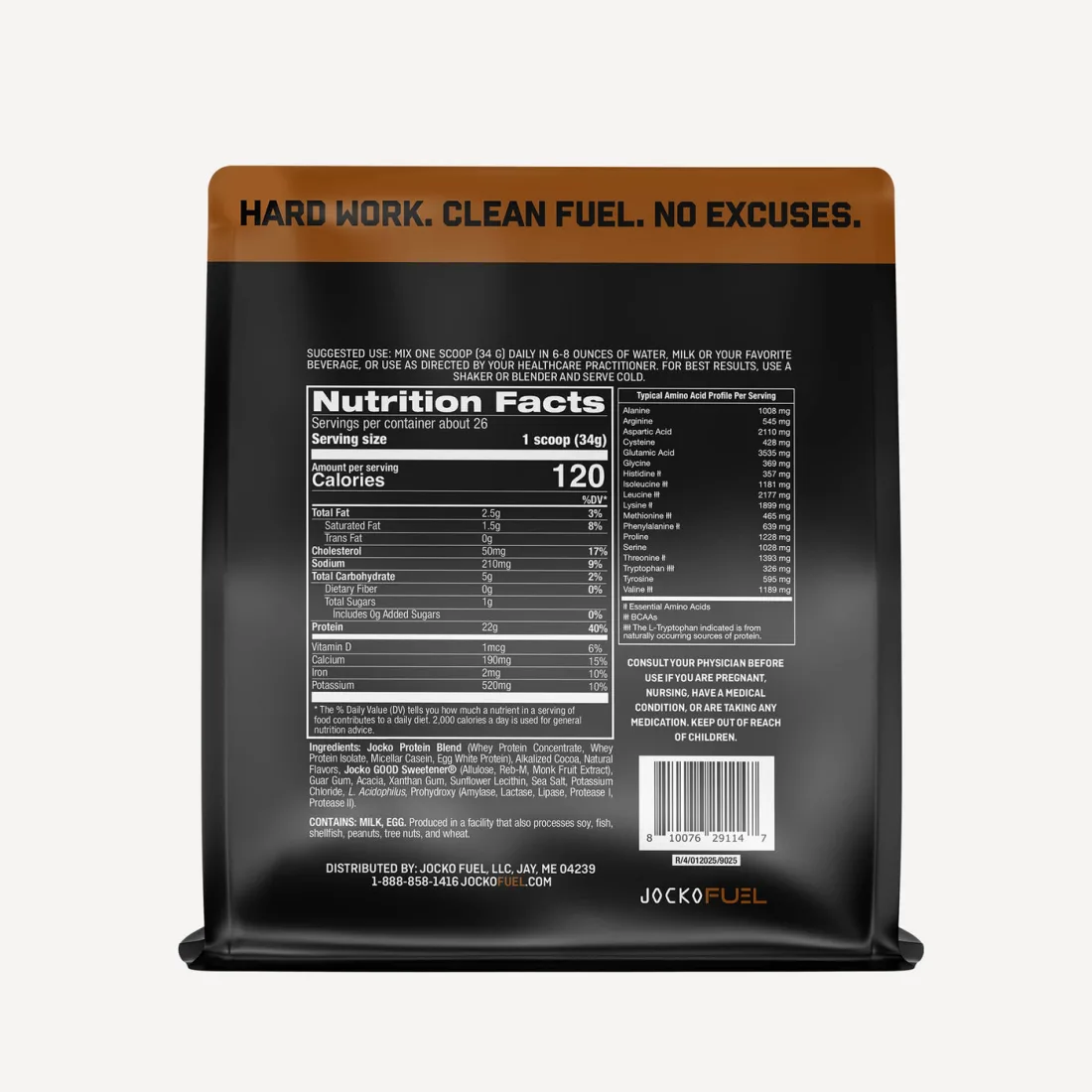
Every protein on the shelf says roughly the same thing on the front. Clean. Pure. No junk. The front is the one surface a brand controls completely, which is exactly why it tells you the least.
The back is a different document. What appears there is set by federal labeling rules, in an order that is not up to the brand, and it is where a formula stops being an adjective and becomes a list you can check. Reading it properly takes about ninety seconds once you know what order to read it in.
Jocko Fuel puts the problem in writing on its own standards page, which is an unusual thing for a company selling the alternative to do:
Products aren't always as clean as they seem: energy drinks full of chemicals and sugar, protein drinks packed with heavy metals. Even labels don't always tell the whole story: ineffective vanity ingredients and proprietary blends that inflate health claims. Jocko Fuel, Our Standards
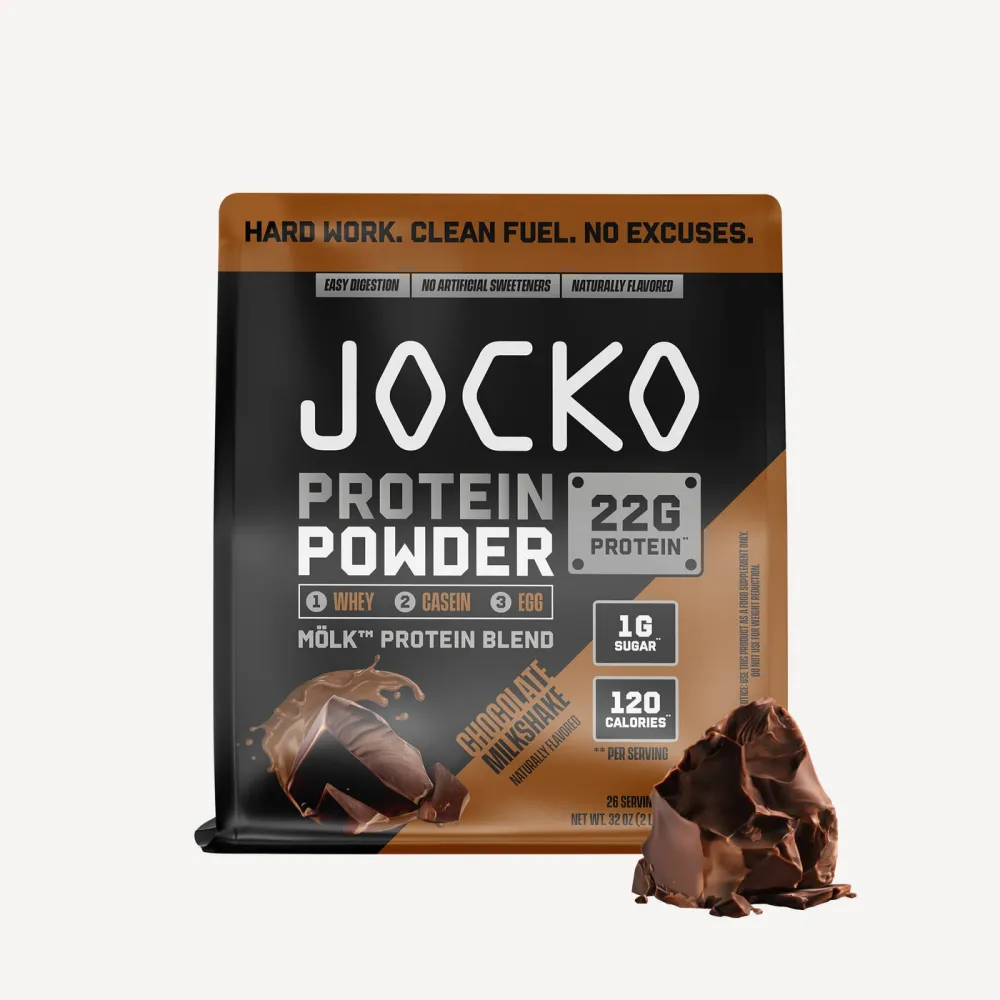
Their ad running this month puts it in four words: Protein Without the Junk. That is a claim about a label, so the fair thing to do is read one. Everything below is taken from the back of a 2 lb bag of Jocko Mölk, chocolate milkshake, as published on jockofuel.com. The five lines apply to any bag you pick up.
Line 1The ingredient list is sorted by weight, so the first entry is most of the tub
Ingredients are listed in descending order of predominance by weight. That single rule does most of the work. Whatever appears first is the largest single component of what you are buying, and whatever appears last is present in an amount small enough to sit behind everything else on the list.
So read the first line, then count how far down the list you have to go before you stop recognizing the point of an ingredient.
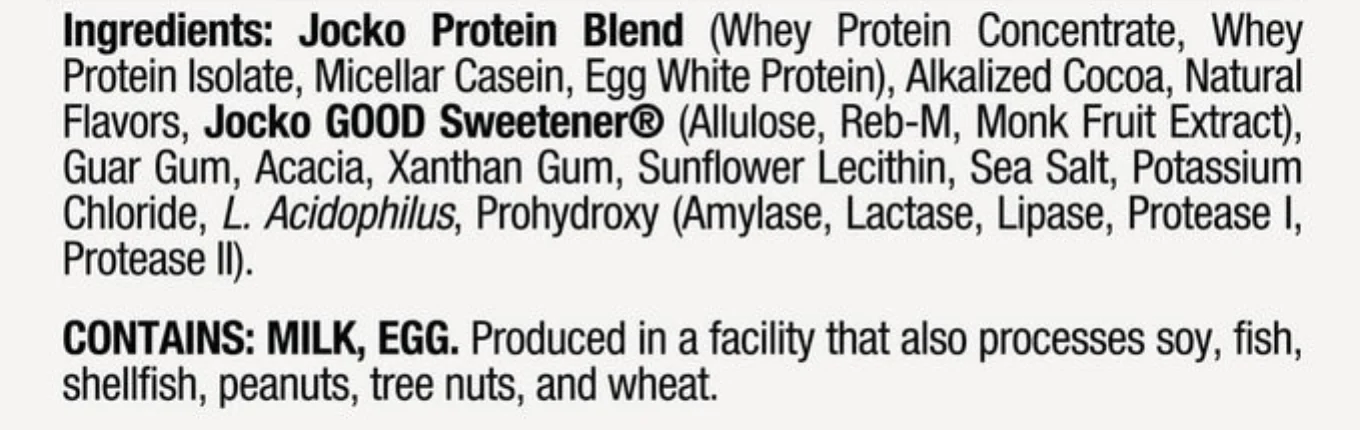
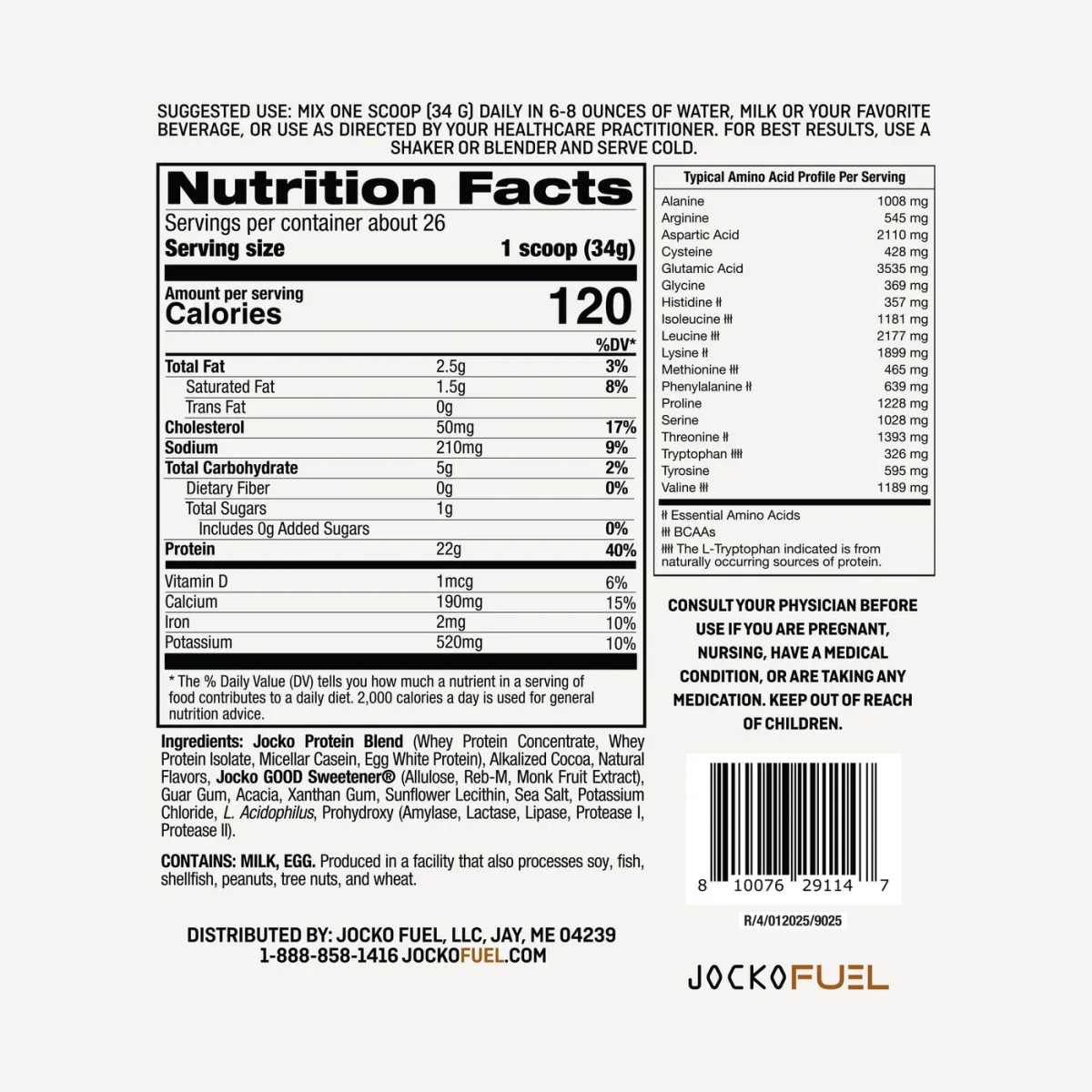
The twelve entries, in the order printed
Heaviest first. This is the whole formula, in the sequence the rule forces.
- Jocko Protein BlendWhey protein concentrate, whey protein isolate, micellar casein, egg white protein. Four named sources, themselves in weight order.
- Alkalized CocoaThe chocolate. Flavor specific, so this entry changes with the flavor.
- Natural FlavorsA legal category, not a promise. More on it further down.
- Jocko GOOD SweetenerAllulose, Reb-M, monk fruit extract. Also in weight order.
- Guar GumThickener. Keeps the shake from separating.
- AcaciaSoluble fiber gum. Body and mouthfeel.
- Xanthan GumThickener and suspension agent.
- Sunflower LecithinEmulsifier. This is the ingredient that stops the powder clumping in cold water.
- Sea SaltFlavor, and part of the 210 mg of sodium on the panel.
- Potassium ChlorideMineral salt. Part of the 520 mg of potassium.
- L. AcidophilusThe probiotic. Named strain rather than a blend.
- ProhydroxyAmylase, lactase, lipase, protease I and protease II. The digestive enzyme blend.
Read it as a shape rather than a list. Protein, flavor, sweetener, four texture agents, two salts, two functional additions. Nothing appears that you cannot assign a job to, and nothing appears twice under two different names.
What this line still does not tell you
The panel names all four protein sources and puts them in weight order. It does not print how many grams come from each one. Nobody in this category does, and it is worth knowing that the honest version of a blend is still an ordering rather than a breakdown. What you can rule out is the version Jocko Fuel names in the quote above: a blend with no sources listed at all.
What a closed blend looks like
Proprietary Protein Matrix 30 g
(protein concentrates and isolates)
One number. No sources, no order, nothing to compare against another bag.
What is printed here
Jocko Protein Blend
(Whey Protein Concentrate, Whey Protein Isolate, Micellar Casein, Egg White Protein)
Four sources, named, in weight order. Concentrate ahead of isolate, casein ahead of egg.
The amino acid table is the only place the protein proves it is protein
Here is the part almost nobody knows, and it is the reason this line matters more than the big number on the front.
The protein figure on a nutrition panel is not usually obtained by weighing protein. It is obtained by measuring nitrogen, then multiplying by a conversion factor of 6.25. The standard method, Kjeldahl, is more than a century old and it is reliable at what it does, which is counting nitrogen atoms. It cannot tell you which molecules those atoms arrived in. Free amino acids and other nitrogen bearing compounds land in the same number as intact protein.
That is why an itemized amino acid profile is the useful part of a label. It is the only place where the total gets broken back down into components you can add up yourself.
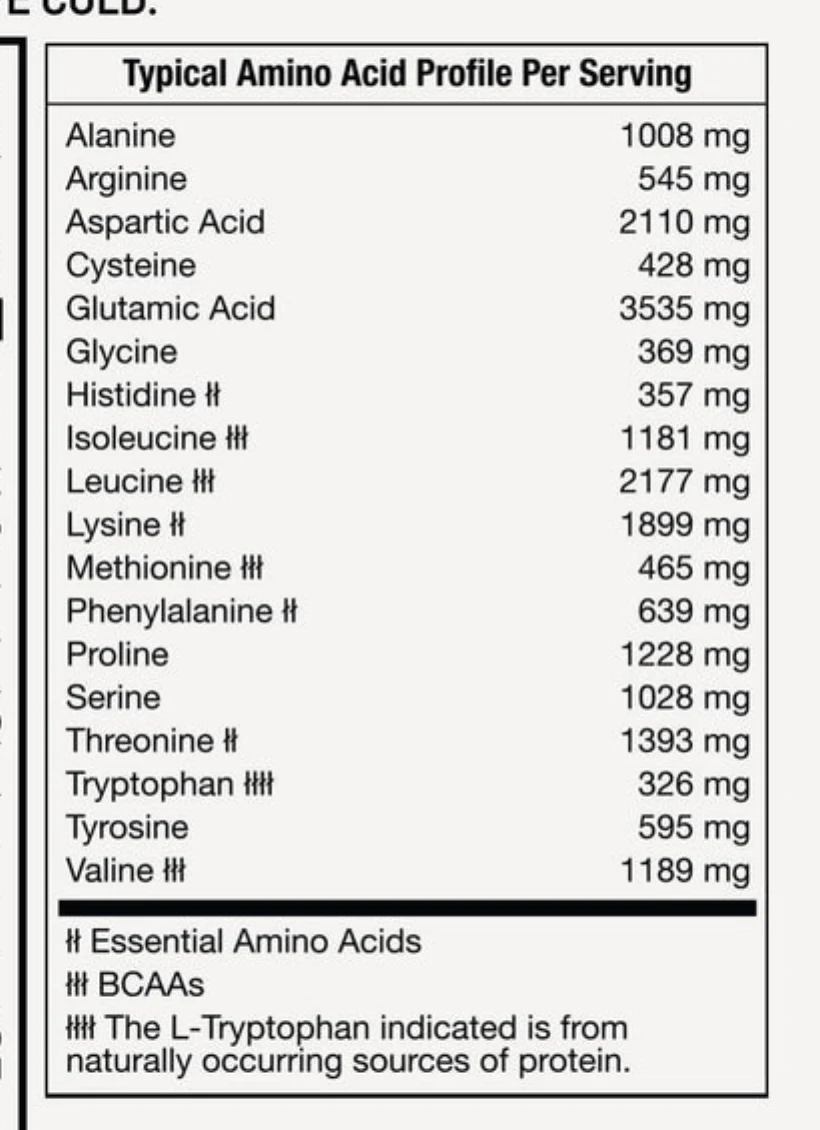
The eighteen printed amounts, largest first
Milligrams per 34 g scoop, exactly as published. The three branched chain amino acids are highlighted.
Amino acid, mg per servingBranched chain
is what the eighteen printed amounts come to when you add them up, against 22 g of declared protein. Ninety-three percent of the total is itemized by name on the bag. The gap is what any amino acid analysis leaves behind: moisture, the small nitrogen fraction that is not amino acid, and rounding.
Two numbers fall out of the same table. Branched chain amino acids: 4.5 g. The nine essential amino acids: 9.6 g. Leucine, the one most often singled out in muscle protein research, is printed at 2,177 mg.
Be fair about what this proves
The heading on the panel says typical amino acid profile. It is a representative analysis of the formula, not a certificate for the bag in your hand. What it does prove is that the company is willing to publish an itemization that anyone can add up, on the package, permanently. That is a different posture from a brand that prints one number and a trademark.
The sweetener line, and what "no artificial sweeteners" is actually claiming
This is the line where the word junk usually gets decided, and it is also the line most often read too fast. A sweetener claim on the front is a claim about a specific short list of ingredients on the back. Read the list.
On this panel the sweetening system is named as a unit and then broken out: Jocko GOOD Sweetener, containing allulose, Reb-M and monk fruit extract. Jocko Fuel describes each one on its own product page.
Allulose
A naturally occurring sugar found in small quantities in figs and raisins. Absorbed in the small intestine but not metabolized for energy.
Reb-M
A steviol glycoside from the stevia leaf. Intense sweetness without calories or an effect on blood sugar.
Monk fruit
A green fruit from Southeast Asia. Its mogrosides are intensely sweet and contain no calories.
Three plant derived sweeteners, all named, none hidden inside a flavor system. The brand's own FAQ goes one step further and rules out two other categories that a no artificial sweeteners claim does not cover on its own: no sugar alcohols and no synthetic additives. Those are separate claims, and it is worth checking whether the bag in front of you makes both.
The sugar line, read honestly
The panel shows 1 g of total sugars and 0 g of added sugars per scoop. There is a rule behind that which nobody advertises: since 2019 the FDA has allowed allulose to be left out of the total sugars and added sugars declarations, while it still counts inside total carbohydrate. So on any bag sweetened with allulose, the sugars line reads lower than the total carbohydrate line would suggest. Here the total carbohydrate is 5 g, and that is the number to compare across brands.
And the line right above it
Natural Flavors sits third on this list, and it will sit somewhere on almost every flavored protein you pick up. It is a legal category covering flavoring substances derived from plant or animal material. It is not a promise about anything, and no brand can make it one. When a front of pack says naturally flavored, this is the line it refers to. Knowing that is the difference between reading a label and being reassured by one.
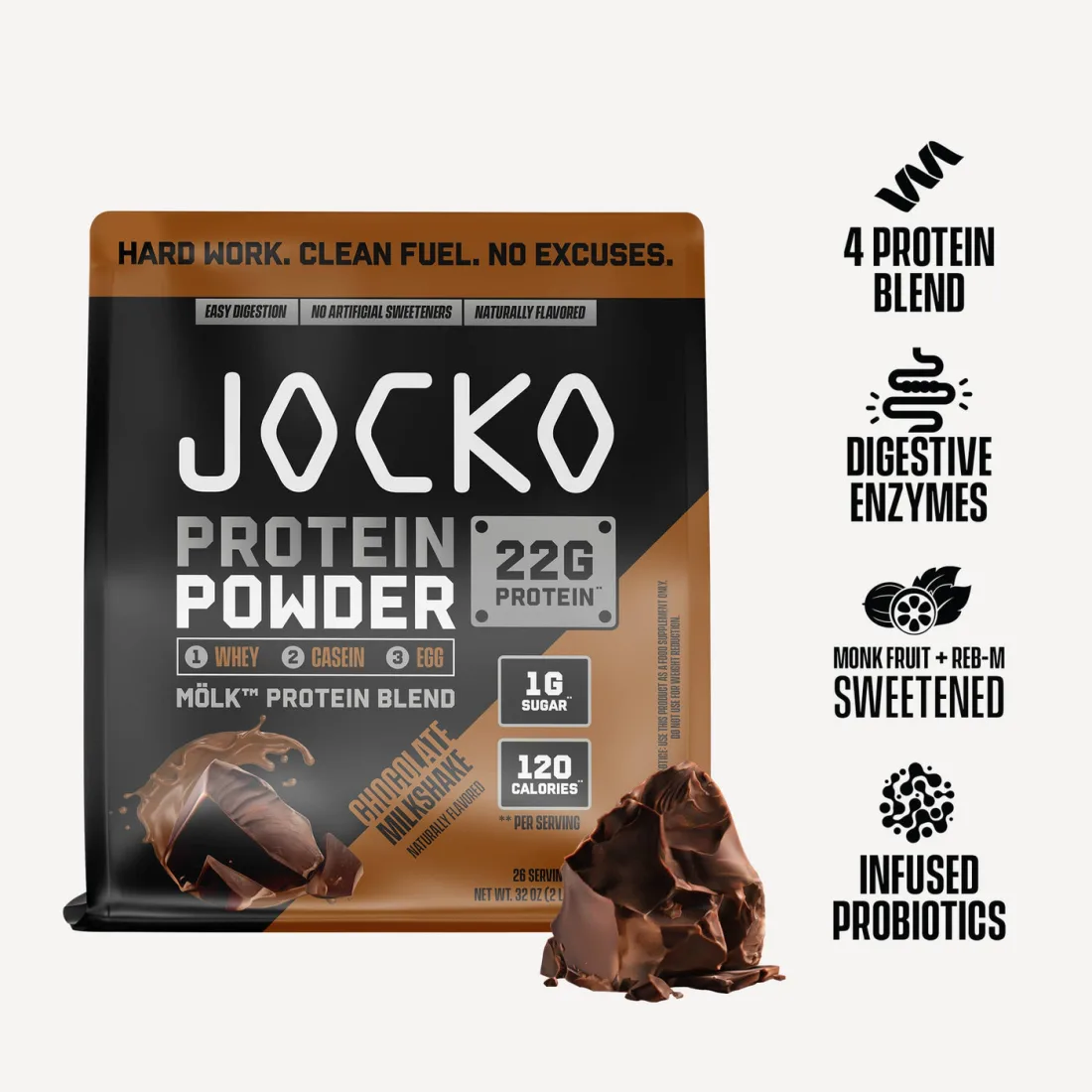
The middle of the list is where texture lives, and where filler hides
Between the flavor system and the bottom of the list you find the ingredients that make a powder behave like a drink. Guar gum, acacia, xanthan gum, sunflower lecithin. They thicken, suspend and emulsify. Sunflower lecithin in particular is the reason a scoop disperses in cold water instead of floating in lumps on top of it.
None of that is a problem, and a shorter list is not automatically a better one. What you are looking for is proportion. Four texture agents in a list of twelve is a formula. Nine of them in a list of twenty-six is a cost structure. The tell is not the presence of gums, it is how much of the list they represent, and whether the same job appears three times under three different names.
The last four lines: enzymes, allergens, the facility, and the math on price
The bottom of a panel is the part people skip, and it carries the two statements with real consequences.
The functional additions. This formula ends on a named probiotic, L. acidophilus, and an enzyme blend of amylase, lactase, lipase and two proteases. Lactase is the one worth noticing on a whey and casein product, because lactose is the usual reason a milk protein sits badly. Their placement at the end of the list also tells you the honest thing: these are present in small amounts, as enzymes and probiotics always are.
The allergen statement. Printed in bold: contains milk and egg, produced in a facility that also processes soy, fish, shellfish, peanuts, tree nuts and wheat. If you have a nut or shellfish allergy, that shared facility line is the single most important sentence on the package, and it does not appear anywhere on the front.
The serving size, which is where price is actually decided. One scoop is 34 g, there are about 26 servings in the 32 oz bag, and each one delivers 22 g of protein. At the listed $49.99 that is $1.92 a serving, or about $2.62 per 30 g of protein. Comparing bags on shelf price alone is meaningless until you have divided by servings and by grams, because scoop sizes across the category are not the same.
That third figure is worth a second look, because it is one of the few genuinely comparative numbers you can build from a panel without leaving the aisle. Twenty-two grams of protein carry 88 of the 120 calories in a scoop. The remaining 32 calories are the cocoa, the gums, the fat that rides along with whey concentrate and the trace carbohydrate. When a competitor's scoop is 40 g for the same 22 g of protein, that difference has to be sitting somewhere, and the panel tells you where.
Who writes a label like this, and the reason they give
Formulas reflect decisions, and decisions have owners. Jocko Fuel publishes both.
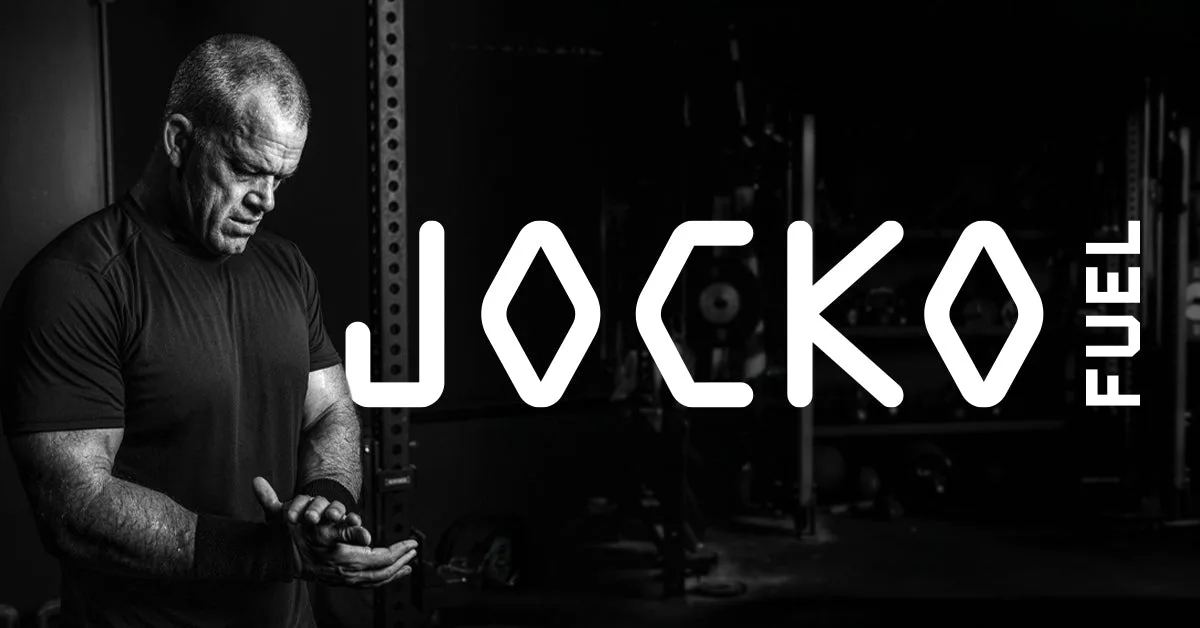
The company's own account of how it started is specific rather than sentimental. As jockofuel.com tells it: an article came out reporting that a supplement Willink was taking contained excessive heavy metals, and he and his kids had been drinking it every day. When the chance came to enter the supplement business, that experience set the terms. Clean nutrition made from only what you need, none of what you do not.
That story is the reason the amino acid table is on the bag. A founder who got burned by what was in a product tends to build a company that prints what is in the product. The standards page turns it into a list of six commitments.
Jocko Fuel, the published promise
- No fillersNothing present without a job
- No banned substancesScreened out at the raw material stage
- Transparent labelsWhat is in it, printed
- Third party testedOutside labs verify the claims
- Science backedIngredients chosen on evidence
- Efficacious dosingAmounts that match the research
The same page describes pre production screening: when raw materials arrive, a third party lab verifies each ingredient as authentic and pure, and a sample of every batch is archived. Their sentence for the whole approach is worth borrowing. Integrity is our most important ingredient.
What people who actually drink it say
Rated 4.94 out of 5 across 4,486 reviews on jockofuel.com. The interesting part is not the score, it is that the recurring subject of the reviews is the same one this article is about.
Rated 5 out of 5
"It mixes incredibly well, no chalky texture, no clumps, and the flavor is surprisingly smooth for a clean protein. What I appreciate most is how light it feels on the stomach while still giving solid recovery after hard training sessions. The ingredient profile is clean, the macros are on point, and you can tell the quality is there."
Rudy H., verified review on jockofuel.comRated 5 out of 5
"I've been lifting and using supplements for decades. These proteins are the hands down winners for taste, ease of mixing, and easy digestion in all my years! No chalky residue, no fake tasting garbage!"
Patrick G., verified review on jockofuel.comRated 5 out of 5
"With the slower digesting proteins in them along with whey, I stay in a positive nitrogen balance longer."
Frank B., verified review on jockofuel.comRated 5 out of 5
"It never gives me any gas issues or digestive issues. It mixes great with water and milk and overall it's just a solid protein powder for everyday use."
Nicholas H., verified review on jockofuel.comThe same panel discipline, in three other formats
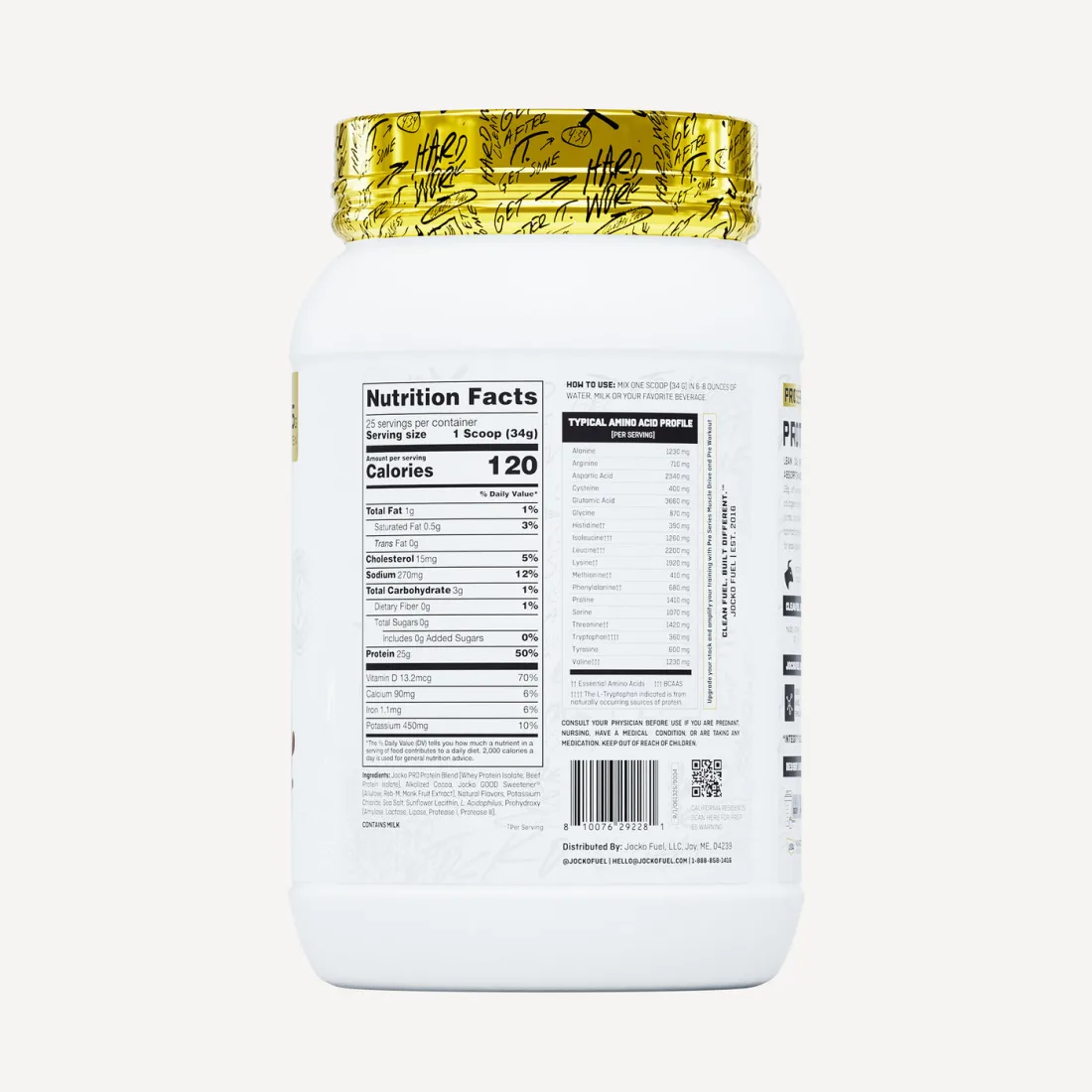
If the powder is not the format you want, the useful thing is that the reading exercise transfers. Every one of these carries the same style of panel, and the Pro Series tub prints its own amino acid profile on the back in exactly the same way.
Mölk Protein Powder
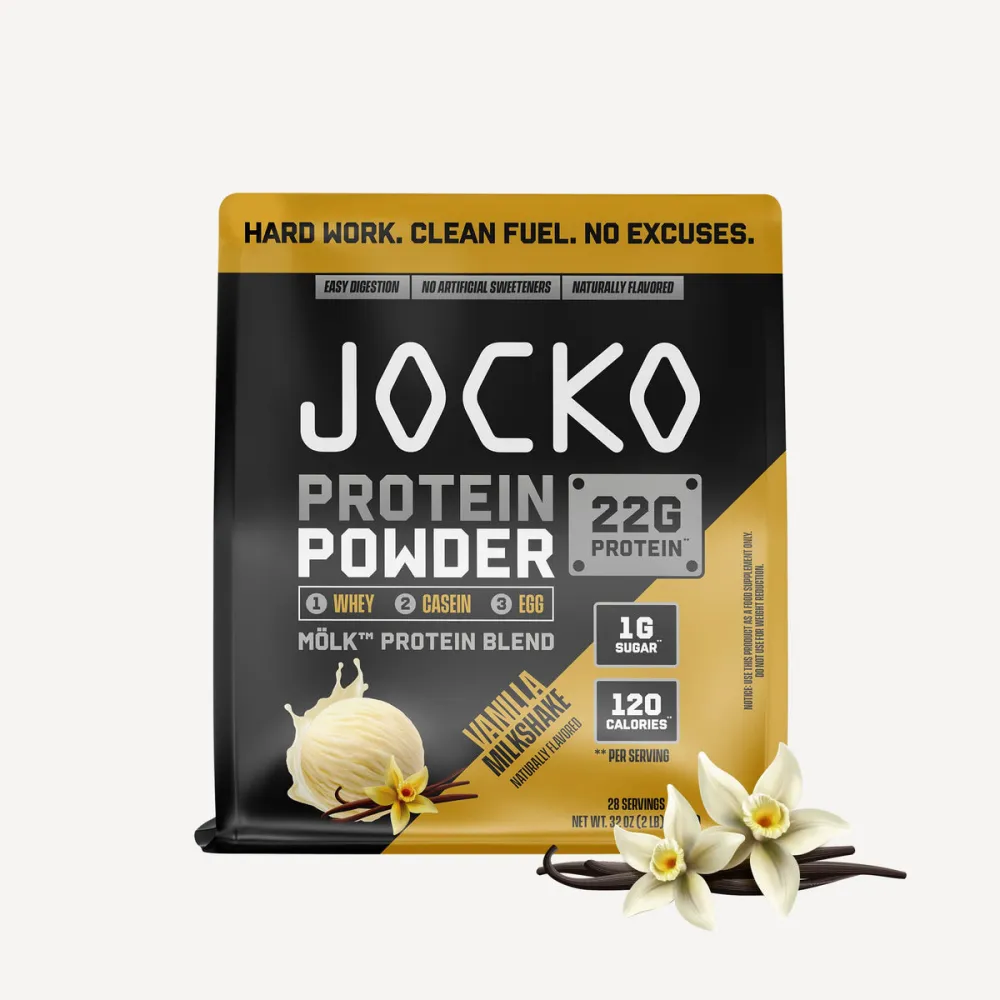
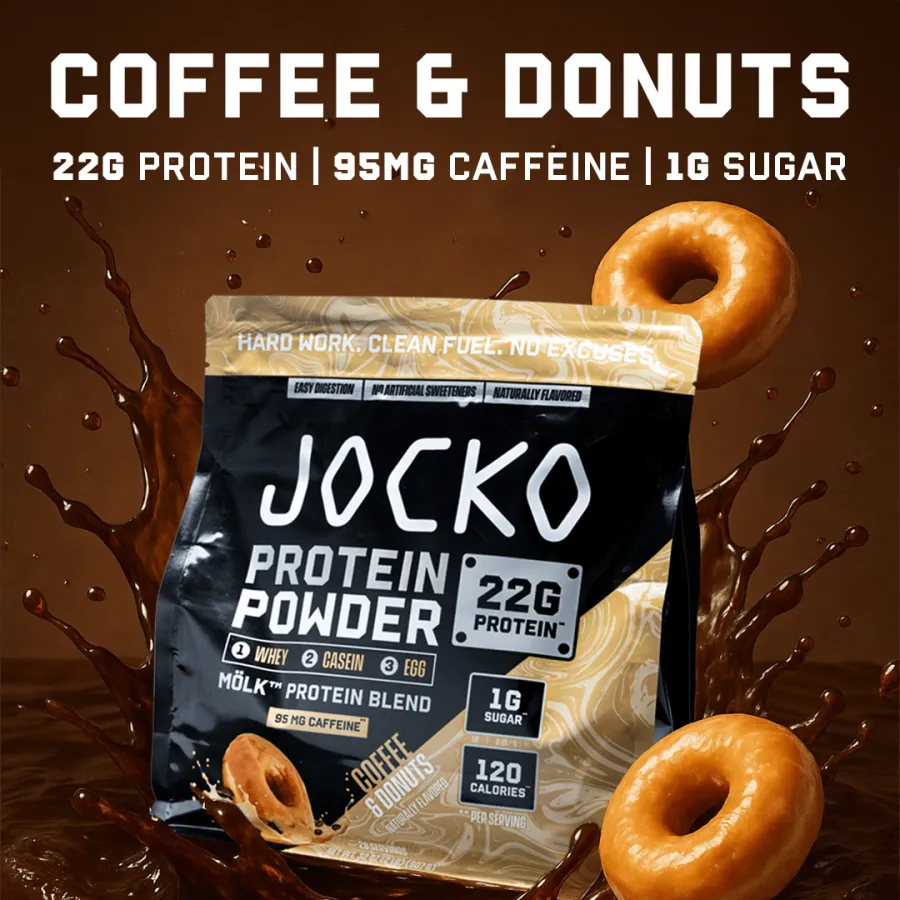
22 g from four protein sources, 26 servings, nine flavors. The bag read above.
$49.99 · See it
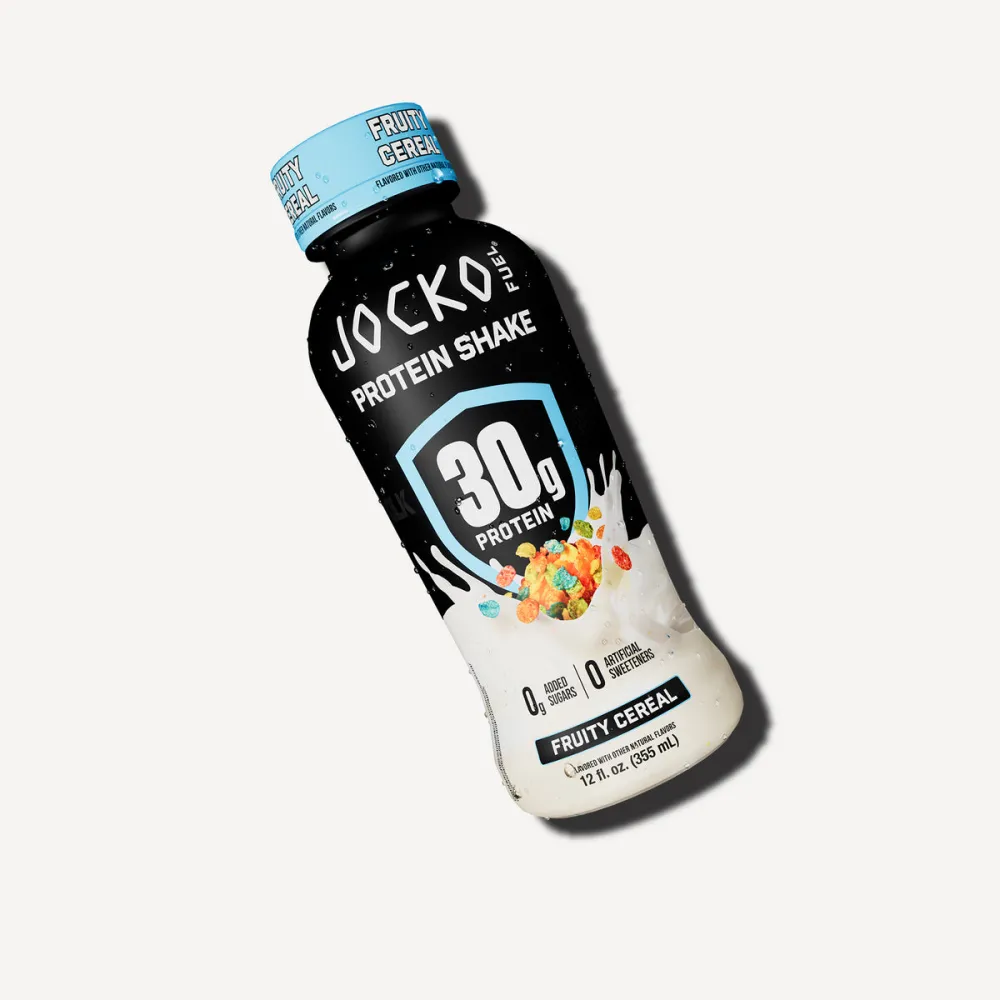 Protein Shakes, 12 pack
Ready to drink. Same reading exercise, printed on the side of the bottle.
$44.99 · See it
Protein Shakes, 12 pack
Ready to drink. Same reading exercise, printed on the side of the bottle.
$44.99 · See it
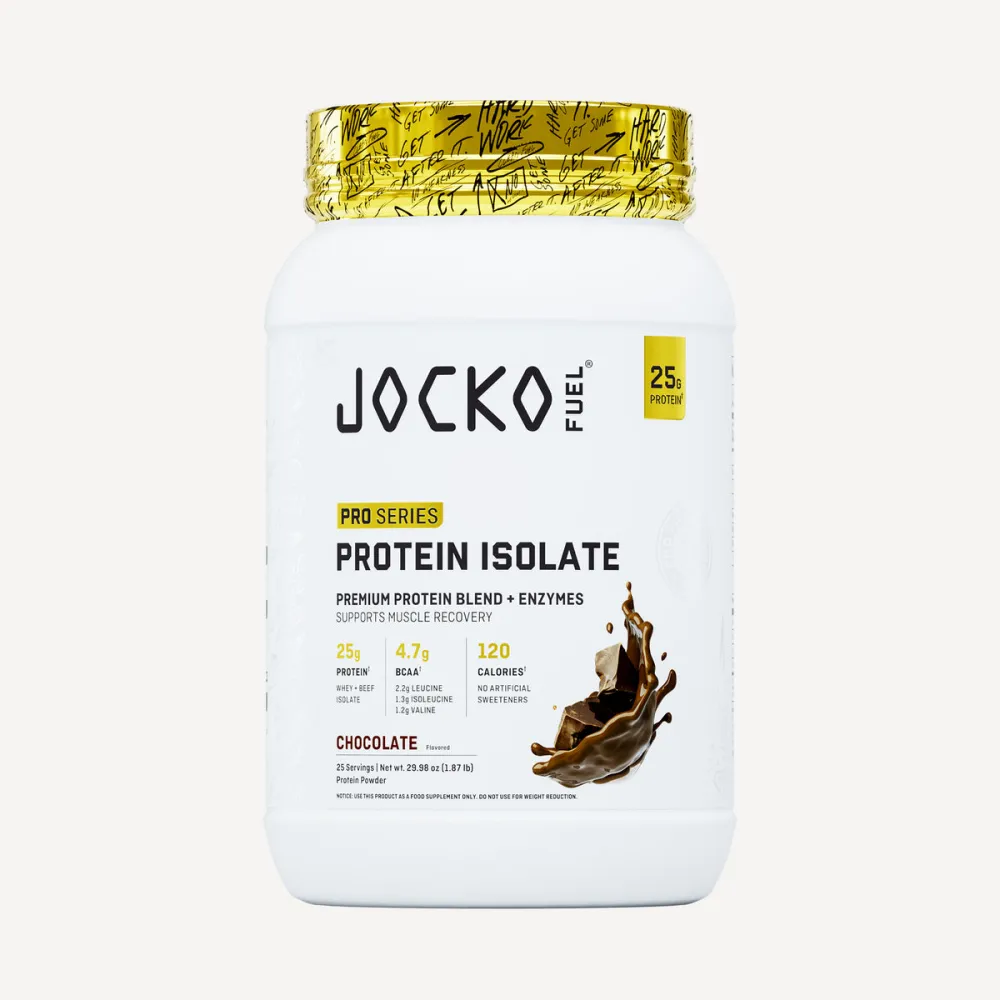 Pro Series Protein Isolate
25 g of protein per scoop, isolate led, with its own amino acid profile on the back.
$64.99 · See it
Pro Series Protein Isolate
25 g of protein per scoop, isolate led, with its own amino acid profile on the back.
$64.99 · See it
The ninety second version
Next time you are standing in front of a wall of protein, run these five in order. It works on any bag, including the ones on this page.
- Read the first ingredient. It is most of the tub. If it is a blend, check whether the sources are named inside the brackets or hidden behind a trademark.
- Find the amino acid table. If there is one, add it up and compare it to the declared protein. If there is not one, the protein number is a nitrogen measurement you cannot break down.
- Read the sweetener entries by name, then check total carbohydrate rather than total sugars, because allulose is allowed to sit outside the sugars line.
- Count the texture agents as a share of the whole list. Four out of twelve is a formula. Nine out of twenty-six is a cost decision.
- Read the bottom. Allergens, shared facility, serving size and servings per container. Then divide the price by servings, and again by grams of protein.
None of this requires trusting anybody. That is the whole point of the back of the bag: the front asks for belief, the back hands you the arithmetic. A brand that prints eighteen amino acids, names four protein sources in order, lists three sweeteners by name and tells you which allergens share its facility has made the arithmetic easy on purpose.
Protein without the junk is a claim. On this bag, it is a claim you can check in ninety seconds.
See Mölk on jockofuel.com 4.94 stars from 4,486 reviews · 60 day money back guarantee · free shipping over $99